
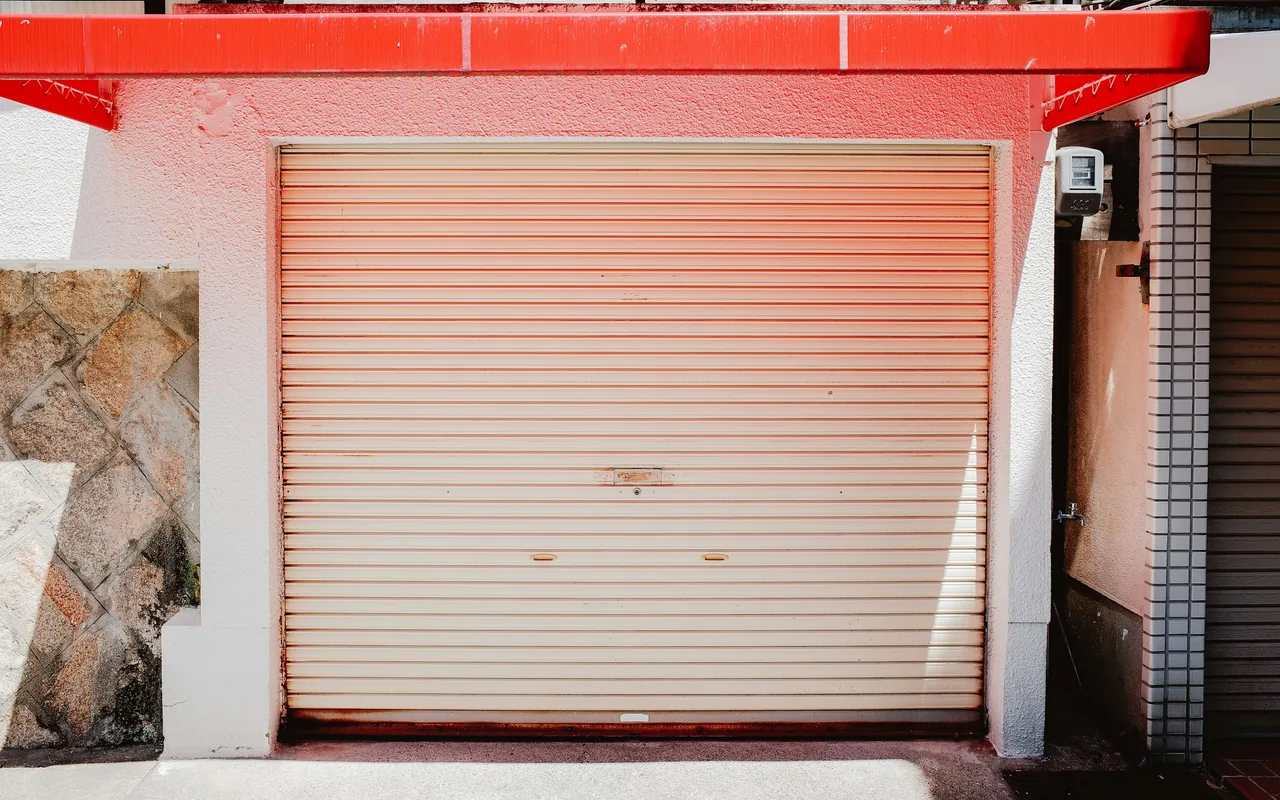
How a roller door works
A roller door is one curtain of corrugated steel that rolls around a drum above the opening. The drum holds a spring that's wound up as the door closes, so it helps you lift the door again. When that tension is right, the door lifts with one hand and stays where you leave it. When it isn't, the door gets heavy, crashes down or creeps up on its own.
Roller door problems we fix
- Door too heavy or too light — the spring tension needs adjusting. This should be done by a technician: the spring is under a lot of load.
- Curtain jumping out of the guides — usually a bent guide, a loose drum bracket or a curtain that's been pushed out of shape.
- Grinding or scraping — dry or dirty guides, worn guide strips, or the curtain rubbing on the brackets.
- Dented curtain — small dents can be worked out; badly creased curtains are replaced.
- Opener struggling — often a balance problem rather than a motor fault.
Beach-side care
Salt and sand get into roller door guides quickly. Hose the guides and the bottom of the curtain with fresh water every few weeks, keep the bottom rail clear of sand, and use a silicone spray on the guides — not grease, which collects grit. Our salt-air care guide has the full routine.
Repair or upgrade?
If the curtain is rusted through or badly creased, replacing the roller door — or switching to a sectional door for a better seal — may be the better spend. We'll quote both if it's close. See new door installation.
Questions
Can I re-tension my roller door spring myself?
We don’t recommend it — the spring is under heavy load and can cause injury. It’s a quick job for a technician.
Why does my roller door keep coming out of the guides?
Usually a bent guide, a loose bracket or a misshapen curtain. We find the cause and fix it.
Should I grease my roller door guides?
No — use a silicone spray. Grease traps sand and grit.